You have an idea for an animated video. It might explain your software, introduce a game character, or make a training lesson more engaging.
The next challenge is finding someone who can bring your idea to life, so begin by clarifying what you need before you search.
To hire 2D Animators successfully, define your style, review relevant portfolios, and agree on the full project scope before work begins. Choose the best fit for your needs, not just the flashiest reel.
Think of it like buying a suit: even a great-looking jacket is disappointing if it doesn’t fit well.
Before you begin, think about what you need created, who your audience is, and which parts of the production you want someone else to handle.
With that in mind, use these ten helpful steps to find the right animation partner.
1. Decide What You Need a 2D Animator to Do
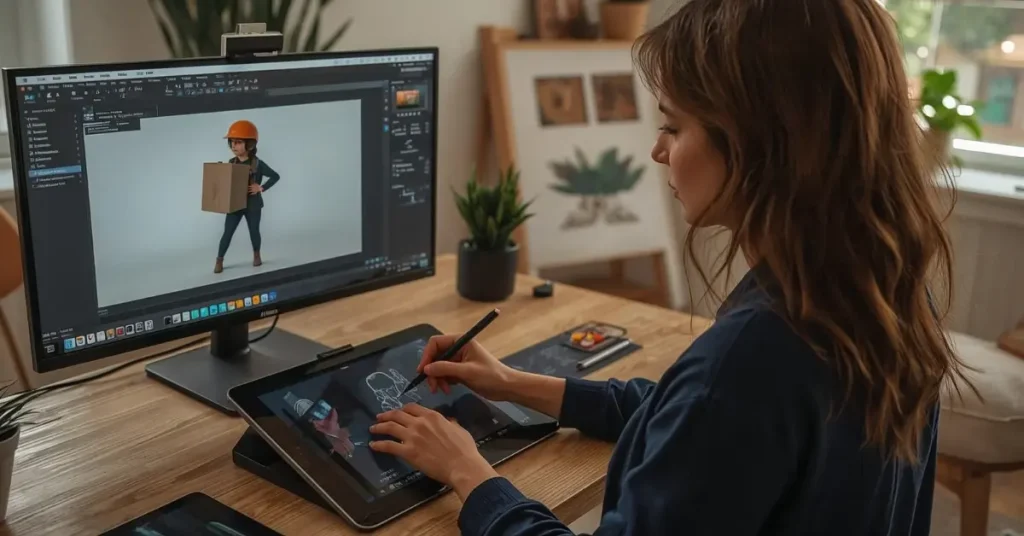
A 2D animator creates movement using flat artwork, characters, shapes, and backgrounds. Their work can include character performance, motion graphics, explainer videos, educational content, and game animation. Some also handle storyboards, asset preparation, compositing, and audio synchronization.
But “animator” does not automatically mean “entire production department.”
One freelancer may turn your finished artwork into animation. Another may offer design and animation together. A full-service studio may also provide scripting, voice recording, editing, and sound. Decide which scope you need before you start comparing providers. Two Animators!, for example, publishes services spanning development through final production.
Before searching, answer:
- What should viewers understand or do afterward?
- Is this an advertisement, tutorial, game asset, or story?
- Do you already have a script and artwork?
- Do you need one animation or an ongoing series?
For an explainer, define the message before picking the visual style. Otherwise, you may commission a very attractive video that explains nothing.
2. Choose the Right Animation Style
2D animation includes several techniques. It’s easier to hire the right person when you can describe the type of movement you want instead of just asking for something cool.
| Style or specialty | What it involves | A useful project fit |
| Frame-by-frame | Drawing successive poses to create movement | Expressive shorts and custom character scenes |
| Rigged or cutout | Moving artwork built from connected parts | Recurring characters and repeatable production |
| Motion graphics | Animating text, shapes, icons, and diagrams | Business explainers and product communication |
| Character animation | Giving characters believable actions and expressions | Cartoons, mascots, and story-driven videos |
| Game animation | Preparing movement for interactive use | Character cycles and gameplay assets |
These categories overlap. A single production can combine character animation, rigged movement, and motion graphics. Current hiring and studio pages show this range of techniques.
If you need a hand-drawn 2D animator, ask for samples that show this skill. If you want animators for games, request examples of game-ready work, not just polished video trailers.
3. Compare Freelance Animators and Animation Studios
Both freelance 2D animators and animation studios can deliver great results. The main difference is how much production support you need, so match the provider to your project’s scope.
| Hiring option | Consider it when | Confirm before hiring |
| Individual freelancer | You need a specialist or have a clear, contained brief | Which tasks they personally handle |
| Small animation team | You need several skills and direct collaboration | Who manages feedback and delivery |
| Full-service studio | You need development, design, animation, and sound | Exactly what the proposal includes |
| Dedicated animator | You have recurring work and an established workflow | Availability, capacity, and ongoing terms |
Smaller projects may let one animator cover several stages. Larger productions commonly split work among storyboard artists, character animators, background artists, and other specialists.
If you know exactly what you need, hire an individual specialist. If you want someone to manage the entire production, choose a studio. If you need support only for a defined part of the work, match that scope before you compare providers.
For a contained assignment, you can compare project-based animation specialists on Fiverr Pro alongside other candidates. Its directory includes varied specialties and international providers, so check the individual seller’s location and scope.
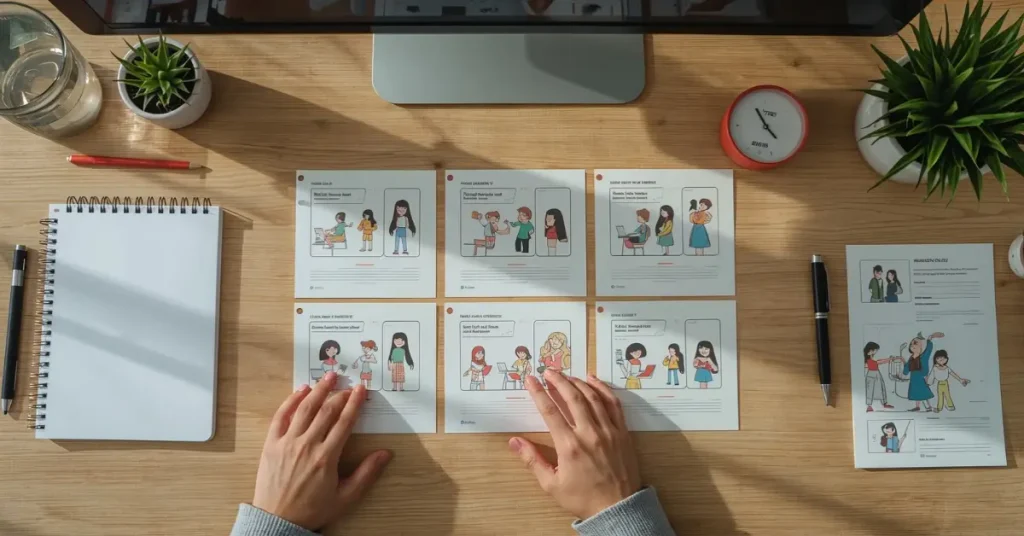
4. Build a Brief That Gets Useful Quotes
Saying, “Please make a 60-second animation,” is just a starting point, not a clear project brief.
A useful brief explains both the creative goal and the technical requirements, and Upwork’s hiring guide recommends specifying the project type, style, existing assets, software requirements, runtime, resolution, frame rate, formats, budget, and timeline.
Include:
- Audience and purpose.
- One main message.
- Expected runtime.
- Two or three visual references.
- Existing scripts, illustrations, logos, and audio.
- Budget range and deadline.
- Required video sizes and file formats.
- Whether you need editable source files.
- Who will approve the work.
Copy-and-Adapt Brief Example
We need a 60-second 2D explainer for a U.S. software audience. The goal is to explain our scheduling tool and encourage trial sign-ups. We have a draft script and brand assets. We need storyboard development, illustration, animation, voiceover coordination, captions, and horizontal and vertical versions. Please itemize your quote and explain your revision process.
This kind of brief gives candidates a clear basis for their pricing, so their quotes are easier to compare.
5. Understand the Cost to Hire a 2D Animator
There is no one-size-fits-all price for professional animation; costs vary by project.
As a marketplace reference, Upwork’s U.S. hiring page lists typical hourly rates of 25–44. That is a platform-specific guide, not a national average or a ceiling for experienced specialists.
Its more comprehensive hiring guide lists example project ranges of 500–2,300 for explainer or promotional videos and 800–3,400 for character animation. The listed scopes differ, so these quotes aren’t interchangeable for the same finished video.
The cost to hire a 2D animator depends on:
| Quote factor | Why you should ask about it |
| Runtime and scene count | A longer or more varied production can require more work |
| Style and movement | Detailed performance may need more production effort |
| Existing assets | Original design adds work beyond animation |
| Audio | Voiceover, music, and sound may be separate |
| Revisions | Late changes can affect approved scenes |
| Deliverables | Extra versions and source files need explicit scope |
These are core scope considerations identified in animation hiring guidance, and they help explain why prices vary.
Request three proposals based on the identical brief. Compare the total work included, not only the opening price.
Affordable should mean good value for what you need, not just a low price with lots of extra charges added later.
6. Find Professional 2D Animators Through Relevant Channels
Here are ten options from the shortlist provided, but this is not a ranked list of the best companies. Provider websites show what they offer, but that does not guarantee quality.
| Option | Type and U.S. relevance | What to investigate |
| Upwork | Marketplace with a U.S.-specific animator directory | Individual specialists and comparable profiles. |
| Fiverr Pro | International marketplace displaying U.S. providers | Project-based packages and specialist portfolios. |
| Two Animators! | Studio listing Mercerville, New Jersey | Hand-drawn, puppet, and traditional production. |
| Magic Motion Studio | Studio stating a Woodhaven, New York base | Character animation, explainers, cutout, and frame-by-frame work. |
| EssenceCartoon | Studio listing a Hilliard, Ohio address | Series, shorts, branded content, and production support. |
| Pixel Studios Inc. | Provider listing a Brooklyn, New York address | Business explainers and broader animation production. |
| Perfect Form | Austin-based motion studio | Design-led 2D animation for brands and digital content. |
| Ajax Creative | Publishes an Austin office and animation services | Branded campaigns, explainers, and mixed production formats. |
| the STUDIO | Publishes New York contact information | Request a current 2D reel and service proposal; the retrieved homepage offered limited service detail. |
| Austin Visuals | Describes an Austin base and U.S. artists | Custom animation and creative development; independently verify references. |
A U.S. office address does not confirm where all contributors work. If domestic production matters, confirm the assigned team’s location in writing.
For marketplaces, browse vetted 2D animation providers and then evaluate the specific person or team. Fiverr Pro advertises vetting, but you should still review relevant work and project terms.
7. Review Portfolios Like a Buyer, Not a Fan
A showreel is designed to impress, but a full project shows whether the animator can deliver consistent quality from start to finish.
Ask for examples close to your targeted style and complexity. Upwork recommends evaluating timing, movement, posing, image-based storytelling, consistency, and the candidate’s contribution to the production.
Useful questions include:
- What did you personally create in this example?
- Which assets came from the client?
- Can you show a complete video?
- How did you handle feedback?
- What would you change for my audience?
For a game project, request relevant character cycles or interactive assets. For an explainer, check whether the message stays clear throughout—not just whether the opening looks expensive.
When relevant, compare character-animation portfolios rather than browsing every animation category.
It is better to see one well-matched project with clear explanations than twenty impressive clips where it is unclear who did what.

8. Confirm Software and Delivery Requirements
The software you use matters when your files must fit an existing production workflow.
Hiring pages commonly identify Adobe Animate, After Effects, Toon Boom Harmony, and TVPaint. Fiverr Pro also identifies Spine for game-character rigging.
If your team already works in Harmony, search for a Toon Boom Harmony animator. If your game requires a Spine workflow, make that requirement explicit.
You do not need every candidate to know every tool. Instead, ask whether their workflow can deliver the files you need.
Confirm:
- Final resolution, frame rate, and aspect ratios.
- Video, image-sequence, or game-asset formats.
- Whether transparency is required.
- Captions and audio deliverables.
- Editable project files and original artwork.
- Dependencies needed for later edits.
Source files are not automatically included. Upwork advises agreeing on project files and source assets before production; Magic Motion Studio, for example, describes different source-file terms by package.
9. Agree on Milestones, Revisions, and Rights
A realistic schedule includes more than animation time, because several production stages can come before and after it.
Common stages include script development, design, storyboards, voice recording, animation, editing, sound, and final delivery. Two Animators! describes these as separate production phases.
Upwork suggests a few days for some short motion graphics and roughly two to six weeks for scripted explainers or character sequences. Treat that as planning guidance, not a promise for your project.
Ask for approval points at each major stage. Specify what counts as a revision and what becomes a scope change.
Changing a color is a small request, but replacing the story after animation has started is a much bigger change.
Put Ownership in Writing
Don’t assume paying an invoice automatically settles copyright ownership. U.S. commissioned work qualifies as “work made for hire” exclusively under specific conditions, and copyright transfers generally require signed written documentation.
Ask the agreement to address original artwork, final animation, source files, third-party assets, and permitted uses. For a valuable character, recurring series, or major campaign, have an intellectual-property attorney review the terms.
10. Start With a Small Paid Test When the Risk Justifies It
For a larger commitment, a focused paid test can help you assess both craft and joint effort. Upwork recommends considering a short animation test based on a storyboard.
Keep it narrow:
- One short scene or movement cycle.
- Clear references.
- Defined deliverables.
- Agreed payment and usage terms.
- A specific review deadline.
Then evaluate whether the candidate followed the brief, communicated clearly, and delivered usable files.
You can discuss a small animation test with a specialist before committing to full production. Avoid turning the test into unpaid speculative work.
The goal is to reduce uncertainty, not to get a free short film.
Frequently Asked Questions
1. What does a 2D animator do?
They create movement and tell stories through two-dimensional artwork. Depending on scope, they may also prepare assets, develop storyboards, composite scenes, and synchronize audio.
2. How much does it cost to hire a 2D animator?
Request a project-specific quote. Upwork’s U.S. guide lists typical hourly rates of 25–44, but style, experience, production tasks, and deliverables change the total.
3. Where can I hire 2D animators in the USA?
Start with a U.S.-filtered directory such as Upwork or contact studios with published U.S. locations. Confirm where the assigned animator and supporting team work.
4. Should I hire a freelancer or a studio?
Choose based on production support. An individual can suit a specialist assignment; a studio may offer development, design, voice recording, and post-production in one place.
5. Can I hire someone for a one-off project?
Yes. Marketplace hiring supports project-based work. Define the scope, milestones, and final handoff before starting.
6. Can an animator create characters, backgrounds, and storyboards?
Some can, but do not assume those services are included. Studios such as EssenceCartoon list these as distinct production tasks
7. Which software should my animator use?
Choose tools that match the technique and delivery workflow. Common options include Animate, After Effects, Harmony, TVPaint, and Spine.
8. Can I hire animators for explainers, product demos, or YouTube?
Yes. Current providers offer explainers, product communication, educational content, and online series. Review examples matching your target audience and format.
9. Can I hire a 2D animator for games?
Yes. Look for game-specific experience, including relevant rigging, movement cycles, and delivery requirements. Spine is one tool identified for game-character rigging.
10. Can I hire a remote 2D animator?
Yes. Marketplaces support online collaboration, and studios may run production remotely. Agree on working hours, communication, reviews, and file sharing.
11. How long does production take?
It depends on scope and approvals. Upwork gives a two-to-six-week reference for some explainers and character sequences; your provider should supply a specific schedule.
12. What files, revisions, and commercial rights will I receive?
Only those covered by the agreement. List final formats, source files, revision rounds, and ownership or licensing terms before work begins.
Ready to hire the right animation expert?
Start with a clear brief. Pick a suitable style. Compare relevant portfolios, itemized quotes, and written terms.
Then pick the professional who truly understands your project, not just the one who makes the biggest promises.
Next, prepare your brief and send it to three shortlisted candidates. A good proposal should explain the process, the price, the deliverables, and what happens if anything changes.