A beautiful vending machine sitting in your garage is not a vending business. It’s an expensive metal wardrobe with a card reader.
Many new vending operators spend weeks comparing machines, snacks, payment systems, and suppliers. Then they discover the hardest part is not buying the machine.
The real money starts with vending machine location leads—businesses, properties, and high-traffic spaces where people actually want snacks, drinks, coffee, healthy options, or everyday essentials. That kind of lead can quietly become a dependable stop on your route. A weak location can turn into a weekly road trip for three dollars and a warm can of cola.
The vending industry is simple in theory:
More people passing by + more waiting time + better product selection = better sales opportunity.
The Right Location Can Make or Break Your Vending Business
That is why smart operators do not just ask, “Where can I put a vending machine?” They ask, “Which locations have enough people, enough demand, and the right decision-maker to make this worth my time?” This is also why the difference between a lead and a placement matters so much.
Whether you want to buy verified vending machine leads, hire a vending machine locator service, or build your own list from scratch, this guide walks you through the whole process.
Quick reality check: A location lead is not the same as a signed placement. A lead is a possible opportunity. A qualified lead has enough traffic and a reachable decision-maker, making a yes more realistic. A confirmed placement has approval, terms, and ideally a signed agreement.
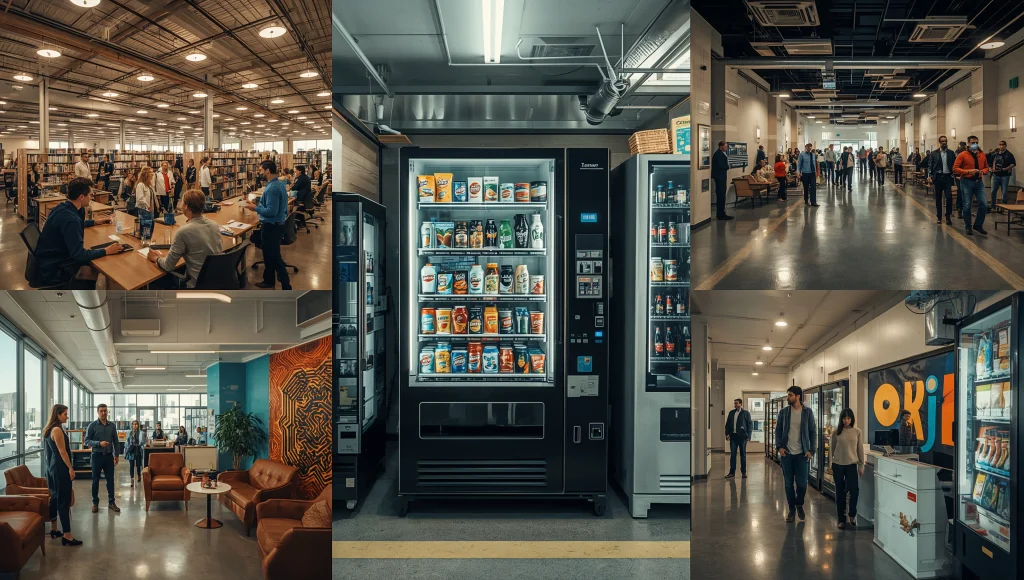
Table of Contents
What Are Vending Machine Location Leads?
Vending machine location leads are potential businesses or property owners who may be open to hosting a vending machine. They can include offices, factories, apartment communities, gyms, hospitals, hotels, warehouses, college campuses, auto shops, laundromats, and many other places with regular foot traffic.
A useful lead should give you more than a business name and an address. At minimum, it should help you answer these questions:
- Is there enough daily traffic?
- Do people stay long enough to buy?
- Is there already a vending operator on site?
- Who has the authority to say yes?
- Is there space, power, and access for a machine?
- Can the location become profitable without turning into a headache?
A promising warehouse with 150 workers on staggered shifts may be worth more than a glamorous lobby with 25 visitors a day. That is why vending is not about fancy zip codes. It is about repeat demand.
Lead vs. placement: Know what you are buying
| Term | What it means | Your risk level |
| Raw vending lead | A business name, address, or contact list | High |
| Qualified lead | A prospect screened for traffic, business type, or interest | Medium |
| Booked appointment | A meeting with a decision-maker | Medium to lower |
| Confirmed placement | The location has agreed to host a machine | Lower |
| Signed location agreement | Terms are documented, and placement is secured | Lowest |
Many vending operators get burned when they buy a list of “exclusive vending machine leads” and assume the list includes placements. It may not. Read the offer carefully. Ask whether you are buying contact data, a meeting, an interested host, or a fully approved location.
Why Location Quality Matters More Than Machine Count
Many beginners think the machine creates the business.
It does not.
The location creates the business.
A premium vending machine placed in an empty building will struggle. A simple snack machine placed inside a busy warehouse can perform consistently. That contrast shows why location matters more than the machine itself.
A vending route with five excellent stops can outperform a route with 20 weak ones. More machines do not automatically mean more profit. More good locations do.
Think of it like this: a vending machine is a tiny retail store that cannot walk around and find customers. It lives or dies based on the people who walk past it.
A strong vending machine placement usually has:
- Reliable employee, resident, student, patient, or visitor traffic
- Long operating hours or multiple shifts
- Few nearby food and drink alternatives
- A waiting area, break room, lobby, or shared common space
- A decision-maker who sees vending as a benefit, not another task
- Safe, easy access for restocking and maintenance
- Enough sales potential to justify product, fuel, labor, repairs, and service time
A practical prospecting benchmark is to focus first on locations with around 50 or more daily visitors, workers, residents, or customers. Warehouses, manufacturing plants, apartment communities, medical offices, hospitals, gyms, and offices can fit that profile, but you still need to verify traffic rather than trust a pretty sign outside. For example, a manufacturing plant with 300 employees working multiple shifts may offer stronger potential than a small retail shop with hundreds of random visitors who only stay five minutes.
For example:
A manufacturing plant with 300 employees working multiple shifts may offer stronger potential than a small retail shop with hundreds of random visitors who only stay five minutes.
A person walking past a machine once may ignore it.
A person working an eight-hour shift who forgot lunch is a different customer.
11 Best Ways to Find Vending Machine Location Leads
1. Use vending placement marketplaces
A placement marketplace is useful when you want access to businesses or property owners who have already shown some interest in hosting a vending machine, but you still need to qualify each location carefully.
For example, VendPlacer launched as a two-sided marketplace where vending operators can contact property owners with available space. At launch, it reported more than 18,000 placement opportunities across 196 U.S. cities, including gyms, hotels, airports, offices, and college campuses; it then listed a $19 monthly operator subscription.
The big advantage is obvious: you are not starting every conversation from zero.
The downside? You still need to qualify the location carefully. A host wanting a vending machine does not automatically mean the site has enough traffic, the right break patterns, enough demand, or the right access to make it profitable.
Best for
- Operators who want to reduce cold outreach
- New vending businesses building their first route
- Operators entering a new city or state
- Businesses that prefer inbound-style opportunities over door knocking
2. Hire a vending machine locator service
A vending machine locator service finds potential accounts for you. Depending on the provider, you may receive a raw lead, a booked appointment, a signed location, or help with your pitch and follow-up.
Some locator services focus on a city, state, or specific account type. Others work nationwide. The best arrangement depends on your goal and the exact lead criteria you want, including traffic, employee count, and access.
For example, VPlaced positions itself as a matching service that connects operators with businesses that want to host machines. Its process includes operator application, verification, matching, a formal offer, and deployment steps.
Before you pay any locator, ask these questions:
- Is the lead exclusive, semi-exclusive, or shared?
- Is this a raw lead, a booked appointment, or a signed location?
- What traffic or employee-count criteria do you use?
- What happens if the prospect says they are not interested?
- Is there a replacement policy?
- Has this lead already been sold to another vending operator?
- Does the service offer proof of interest from the host, or only a lead?
- Who handles the contract and final negotiation?
Do not be shy here. A vague answer is usually an answer.
3. Search Google Maps for local vending machine leads
Google Maps is one of the most practical free tools for finding vending machine locations near you.
Search by business category plus your city, ZIP code, neighborhood, or industrial park. Then filter for the kind of site you actually want, so you build a prospect list with a better fit, not just more names.
Try searches such as:
- “warehouses near me”
- “manufacturing companies in [City]”
- “office buildings in [City]”
- “apartment complexes in [ZIP code]”
- “gyms near me”
- “medical offices in [City]”
- “distribution centers in [County]”
- “laundromats near me”
- “car dealerships in [City]”
- “hotel near [Airport]”
Google Business Profiles appear in both Google Search and Maps, making them an accessible starting point for finding local businesses, addresses, phone numbers, websites, hours, and reviews.
A simple Google Maps workflow
- Pick one target category, such as warehouses or gyms.
- Search inside a 10- to 15-mile radius of your route.
- Add promising businesses to a spreadsheet.
- Note operating hours, reviews, business size clues, nearby food options, and whether the site looks busy enough to justify a machine. Keep only the prospects that meet your traffic and access threshold.
- Visit the best prospects during a quiet time.
- Ask to speak with the office manager, facilities manager, property manager, or owner.
- Follow up with a short email and simple proposal.
Do not try to contact 500 random businesses at once.
The goal is not to collect thousands of names. The goal is to find businesses where vending actually makes sense based on traffic, access, demand, and the right operating conditions.
Start with 20 high-potential prospects. A smaller, sharper list beats a giant spreadsheet full of ghosts.
4. Target warehouses and distribution centers
If you want vending machine leads for warehouses, you are looking in one of the strongest categories.
Warehouses and distribution centers often have:
- Large employee counts
- Long shifts and overnight schedules
- Limited access to restaurants
- Break rooms where employees gather
- Regular demand for drinks, snacks, coffee, and meal options
- Workers who may not have time to leave the property
A warehouse with 100 people on two shifts can be a very different animal from a warehouse with 100 employees who are rarely onsite at the same time. Ask about shift schedules, break times, on-site cafeterias, staffing patterns, and whether the traffic is steady enough to support vending.
A practical local prospecting approach is to prioritize sites with 50 or more daily visitors, then visit during off-peak hours rather than trying to win the account in a rushed phone call.
5. Prospect manufacturing plants and factories
Manufacturing plants are often excellent vending machine locations because employees may work fixed shifts, have scheduled breaks, and spend long hours away from retail options.
For vending machine leads for manufacturing plants, look for:
- Plants running multiple shifts
- Facilities with 50 or more employees per shift
- Remote industrial parks
- Businesses with employee break rooms
- Companies without a full cafeteria
- Factories where workers cannot easily leave during breaks
The pitch is straightforward: you provide a reliable employee amenity without the company needing to buy inventory, manage repairs, or assign staff to run a snack bar.
Do not lead with “I want to put my machine here.” Lead with the benefit: “I can provide a clean, cashless snack and beverage service for your team, handle the stocking and maintenance, and tailor products to your shifts.”
That feels like a service because it is.
6. Find office vending machine placement leads
Office buildings may seem obvious, but not every office is a winner. A small law office with nine people probably will not support a full snack-and-drink machine. A large corporate campus, call center, insurance office, coworking space, government office, or multi-tenant office building might, especially if the onsite count, break traffic, and access are strong.
When seeking office vending machine placement leads, focus on:
- Office buildings with 50-plus onsite workers
- Coworking spaces and shared offices
- Call centers
- IT parks and tech campuses
- Corporate headquarters
- Multi-tenant office complexes
- Government buildings
- Banks and credit-union operations centers
Ask whether employees work in person, hybrid, or fully remote. A building that looked busy in 2019 may now feel like an expensive waiting room for the ghost of office culture, so confirm the current on-site headcount and traffic before you pitch.
7. Approach apartment communities and property managers
Apartment complex vending machine leads can be excellent, especially for large communities with amenities, laundry rooms, clubhouses, package rooms, pools, fitness centers, and resident lounges that people actually use. Focus on communities with steady resident traffic that can support a machine.
Good targets include:
- Apartment communities with 100 or more units
- Multifamily communities with 200-plus units
- Condominiums with common amenities
- Student housing
- Senior living communities
- Military housing
- Mixed-use residential developments
A vending machine in an apartment clubhouse is not always enough on its own. But a combination of laundry vending, snack vending, beverage vending, smart coolers, or amenity-area machines can create a better opportunity if resident traffic is strong and the placement fits the site.
The person you want is usually the property manager, regional manager, facilities manager, or owner—not the leasing agent near the front desk.
8. Use B2B databases to build your own prospect list
If you want control over your vending machine lead generation, broad B2B databases can help you build targeted lists by industry, geography, employee count, and company size.
Data Axle, for example, provides business data that can include company location, industry classification, employee count, and sales volume. Its database has been described as containing data on nearly 13 million U.S. businesses.
That lets you create focused lists such as:
- Warehouses within 15 miles of your route with 50–250 employees
- Manufacturing plants in a selected county
- Apartment communities with 100-plus units
- Gyms in high-income neighborhoods
- Medical offices with large staff counts
- Hotels near airports or convention centers
Apollo is another option for identifying companies and decision-makers. It says its database includes more than 240 million contacts and 30 million companies, with filters for business data and outreach workflows.
Best job titles to target
| Location type | Best decision-maker titles |
| Office building | Office manager, facilities manager, HR manager |
| Warehouse | Operations manager, warehouse manager, site manager |
| Manufacturing plant | Plant manager, HR manager, operations manager |
| Apartment community | Property manager, regional manager, community manager |
| Gym | Owner, general manager, operations manager |
| Hospital or clinic | Facilities manager, food service manager, operations director |
| Hotel | General manager, facilities manager, director of operations |
| School or college | Facilities director, campus services, auxiliary services |
Use the data to start a conversation, not to spam every contact in the county. Relevance wins, so narrow by the strongest fit criteria before you reach out, including traffic, count, and access.
9. Walk industrial parks and commercial areas
This is old-school prospecting, and it still works.
Drive through industrial parks, warehouse districts, medical corridors, office clusters, apartment developments, and commercial areas. You will spot things no database can explain:
- A busy loading dock at 6:30 a.m.
- A packed employee parking lot
- A lobby with long wait times
- A broken or empty vending machine
- A gym with people constantly coming and going
- A warehouse surrounded by absolutely nothing but asphalt and forklifts
A dead vending machine in a busy building can be a particularly interesting signal. It may show that the location already has demand, but the previous service failed on restocking, maintenance, pricing, product selection, or communication. It is not an automatic win, but it is worth asking whether the traffic, access, and operator fit are actually there.
Walk in professionally. Dress cleanly. Bring a simple one-page service sheet. Do not corner the receptionist like a contestant on a game show.
Try a simple opener:
“Hi, I run a local vending service. I am checking whether your team has snack and drink options onsite, and whether a vending setup would be useful here. Who normally handles employee amenities or facility services?”
Short. Human. No speech that sounds like a corporate robot wrote it in a basement.
10. Ask for referrals from current accounts
Your best next vending machine location may be one conversation away from your current route.
Once you provide reliable service, ask satisfied managers:
- “Do you manage any other buildings?”
- “Do you know another warehouse, office, or property manager who may need vending?”
- “Would you be comfortable introducing me to another location?”
- “Do you have a sister facility nearby?”
Referrals work because trust arrives before you do. You are no longer just another vending operator calling out of nowhere. You are “the person who keeps the machines clean, stocked, and working.”
That is a much better introduction.
11. Create a Follow-Up System
Finding leads is only half the job.
Many vending placements happen after multiple conversations.
Track:
- Date contacted
- Person contacted
- Response
- Follow-up date
- Location status
A simple CRM or spreadsheet can prevent good opportunities from disappearing.
Remember:
A “not now” is not always a “never.”
A company may reject vending today and request it six months later.

Best Vending Machine Locations by Industry
Not every business is a good fit. Use a quick way to prioritize your lead list by lead type.
| Industry or venue | Why it can work | What to verify |
| Warehouses | Shift workers, long hours, limited food options | Employee count per shift, breakroom access |
| Manufacturing plants | Fixed breaks and recurring employee traffic | Cafeteria, safety rules, shift patterns |
| Offices | Employees, visitors, waiting areas | Hybrid work levels and nearby food |
| Apartment communities | Residents use amenity areas and laundry rooms | Unit count, machine placement area |
| Gyms | High beverage and healthy-snack demand | Membership volume, existing retail counter |
| Hospitals | Staff, visitors, long hours, waiting rooms | Vendor rules, food-service contracts |
| Hotels | Guests need convenient drinks and snacks | Lobby traffic, onsite shop, occupancy |
| Colleges | Students, dorms, libraries, late-night demand | Campus vending contracts and procurement rules |
| Laundromats | Customers wait onsite for extended periods | Existing machines, hours, payment demand |
| Car dealerships | Customers wait for service and staff stay onsite | Service department traffic and waiting times |
| Medical centers | Visitors and staff spend long periods onsite | Property management and healthcare policies |
| Transportation hubs | Constant foot traffic and convenience demand | Security, lease terms, existing operators |
How to Qualify a Vending Machine Lead Before You Pitch
You do not need a complicated MBA spreadsheet for every prospect. You do need a consistent checklist to clearly define what qualifies as a lead.
The Vending Location Qualification Checklist
Before you spend money on a locator service, drive across town, or buy another machine, check the following:
- Daily traffic: Do at least 50 people pass through or work onsite each day?
- Employee count: How many people are there per shift, not just on paper?
- Operating hours: Is the site active during evenings, nights, weekends, or holidays?
- Food competition: Is there a cafeteria, convenience store, restaurant, or food truck nearby?
- Machine competition: Is vending already onsite? If yes, why would the client switch?
- Customer fit: Do people have downtime, breaks, waiting periods, or convenience needs?
- Decision-maker access: Can you reach the person who can approve placement?
- Space and power: Is there indoor space, electrical access, and enough clearance?
- Service access: Can you restock safely and easily?
- Product fit: Would snacks, healthy foods, beverages, coffee, frozen foods, or specialty vending fit?
- Contract status: Is the location already tied to another vending agreement?
- Route fit: Is the account close enough to service profitably?
A quick scorecard
| Qualification factor | Weak lead | Solid lead | Excellent lead |
| Daily traffic | Under 50 people | 50–100 people | 100+ people |
| Operating hours | Limited daytime only | Standard business hours | Multiple shifts or 24/7 |
| Food options | Many close alternatives | Some alternatives | Few or no easy alternatives |
| Decision-maker | Hard to identify | Contact identified | Interested decision-maker engaged |
| Route distance | Far from current route | Manageable drive | Near current stops |
| Competition | Strong existing service | Weak competitor | No service or poor service |
| Placement status | No clear interest | Exploring options | Ready to review proposal |
A lead does not need a perfect score. Still, it should have enough green flags to qualify as worth the time and equipment investment.
Paid Vending Machine Leads vs. DIY Prospecting
No single method is best for getting vending machine leads, and not every lead type fits both methods equally well. So choose based on your situation.
Both methods can work.
The right choice depends on your budget, time, sales skills, territory, patience level, and the lead type you want to pursue.
| Method | Cost | Time required | Lead control | Best for |
| Placement marketplace | Low to medium | Medium | Medium | Operators seeking interested hosts |
| Locator service | Medium to high | Low to medium | Low to medium | Busy operators wanting help |
| Vending lead app | Medium | Medium | High | Operators building their own pipeline |
| Google Maps | Free | High | High | New operators and local route builders |
| B2B database | Medium to high | Medium | Very high | Operators targeting exact industries |
| Cold walk-ins | Low | High | High | Local territory expansion |
| Referrals | Low | Medium | Medium | Established operators |
| Networking | Low to medium | Medium | Medium | Long-term relationship building |
When buying leads makes sense
Buying vending machine location leads may make sense if:
- You have machines ready to place.
- You understand your ideal customer profile.
- You can follow up quickly.
- You have a clear service area.
- The provider should explain exclusivity and replacement rules.
- You are evaluating leads based on revenue potential, not excitement, so define what qualifies as a strong lead.
When DIY lead generation makes sense
Build your own vending machine business leads if:
- You are on a limited budget.
- You want to own your prospect list.
- You know your local market well.
- You are comfortable with in-person prospecting.
- You want to target a very specific niche, such as warehouses, gyms, or apartment communities.
- You have time to follow up consistently.
The best strategy is often a hybrid. Use marketplaces or locator services for faster opportunities, while building your own long-term pipeline through Google Maps, referrals, local scouting, and B2B data to expand your lead list.
How Much Do Vending Machine Location Leads Cost?
There is no honest one-size-fits-all price because providers sell very different things.
A raw business list may cost far less than a booked appointment. A booked appointment may cost far less than a verified, exclusive, signed placement. Define each lead type clearly: raw list, qualified lead, booked appointment, or confirmed placement. A raw list is basic contact data. A qualified lead meets your minimum traffic, access, and decision-maker criteria. A booked appointment is a scheduled conversation. A confirmed placement is an approved location. A “guaranteed” lead can still be worthless if the location has no traffic, no decision-maker, or no room for a machine.
Instead of asking only, “How much does this lead cost?” ask:
- What exactly am I receiving, and how qualified is it?
- Does it meet my minimum traffic, access, and decision-maker criteria?
- Is this lead exclusive?
- Was the location contacted recently, and by whom?
- Did the decision-maker request vending service, or was it unsolicited?
- Can I see the qualification criteria used?
- What happens if the account declines?
- Do I receive a replacement?
- Is there a refund policy?
- Is the lead within my service radius and route fit?
- Is there any commission, rent, or revenue-share requirement?
The cheapest lead can become the most expensive when it takes six calls, three visits, and a long drive to learn that the building has 14 employees and a vending contract through 2029. That is why the real cost is more than the price tag. With that in mind, focus next on what to offer so the conversation stays useful after the lead is qualified.
What Should You Offer a Business Owner?
Most businesses do not care about your machine model, your shiny touchscreen, or the fact that it has 40 spirals. They care about whether the service makes life easier. With that in mind, your offer should focus on:
Your offer should focus on:
- No upfront cost for the host, where appropriate
- Reliable stocking and maintenance
- Cashless payment options
- Product choices based on the location’s needs
- Healthy snacks, beverages, coffee, meal items, or specialty products when relevant
- Flexible service schedules
- Clean, professional equipment
- Clear support when something goes wrong
- A straightforward vending machine location agreement
For a gym, highlight protein drinks, water, energy drinks, and healthy snacks. For a warehouse, focus on cold drinks, filling snacks, quick meals, and multiple-shift support. For a senior living facility, keep the conversation centered on resident and visitor convenience, accessibility, and appropriate product selection. In each case, match the offer to the setting.
The same machine does not belong everywhere. The location should shape the offer. Once the offer is clear, put the agreement in writing so placement expectations stay aligned.
Do You Need a Vending Machine Location Agreement?
Yes. Even a simple written vending machine location agreement is better than a handshake that disappears the moment management changes.
Your agreement should cover:
- Names of both parties
- Exact machine location
- Start date and contract term
- Access hours for servicing
- Electricity and space responsibilities
- Product and pricing expectations
- Commission, rent, or revenue-share terms, if any
- Maintenance responsibilities
- Damage and liability language
- Cancellation notice requirements
- Whether the host can request machine removal
- Whether you have exclusivity for vending categories
This is not about being dramatic. It is about avoiding the classic “Oh, we thought the machine was temporary” conversation six months later. A clear agreement now prevents confusion later. For more complex agreements, leased spaces, hospitals, schools, airports, military properties, or major corporate accounts, consider having an attorney review the document before you sign.
For complex agreements, leased spaces, hospitals, schools, airports, military properties, or major corporate accounts, consider having an attorney review the document before you sign.
Common Mistakes to Avoid
Chasing every lead
A giant list is not a strategy. Focus on your best categories, best territory, and best route fit.
Buying machines before securing locations
Machines are easier to buy than profitable placements. Secure demand first whenever possible, because location matters more than equipment.
Ignoring route density
A decent location 45 minutes away can become a bad account after fuel, labor, and restocking time.
Assuming “exclusive” means “guaranteed”
Exclusive may only mean the provider did not sell that exact contact to another operator. It does not mean the prospect will say yes, so treat exclusivity as a lead detail, not a guarantee.
Pitching the machine instead of the service
Business owners want convenience, reliability, and fewer headaches. Sell the outcome, not the hardware. Keep that same service-first mindset when you follow up, because timing can change the response.
Skipping follow-up
A prospect may say no today because they are busy, under contract, or dealing with a bigger problem. Follow up professionally. Timing changes, and a later conversation may land better.
Frequently Asked Questions
1. What are vending machine location leads?
Vending machine location leads are businesses, properties, or decision-makers who may be interested in hosting vending machines. They can be raw contact information, qualified opportunities, booked appointments, or confirmed placements. They may include warehouses, offices, gyms, apartment complexes, hospitals, hotels, schools, factories, and other high-traffic venues.
2. How do vending machine lead services work?
Lead services gather potential vending opportunities through advertising, databases, outreach, property-owner networks, marketplaces, or local research. They may sell raw contact lists, qualified leads, booked appointments, or confirmed placements. Always confirm exactly which lead type you are paying for.
3. Are vending machine location leads exclusive or sold to multiple vendors?
It depends on the provider. Some leads are exclusive, while others may be shared with several operators. Ask directly whether the lead is a raw contact, a qualified lead, a booked appointment, or a confirmed placement; whether other vending companies have already contacted the prospect; what qualification criteria were used; and whether the prospect meets your minimum traffic, access, and decision-maker criteria.
4. How much do vending machine location leads cost in the United States?
Costs vary by quality and service level. Raw prospect lists are generally cheaper than qualified leads, booked meetings, or confirmed placements. Do not compare prices without comparing what is included, which lead stage is included, whether the lead is exclusive, whether the provider offers replacements, and whether the lead meets your minimum traffic, access, and decision-maker criteria, because those details drive value.
5. Do vending machine locator services guarantee a placement?
Some providers offer guarantees or replacement policies, but no provider can truly guarantee that a location will remain profitable. The outcome depends on traffic, product mix, pricing, servicing, competition, customer behavior, and your agreement with the host.
6. What types of businesses are best for vending machine placement?
Strong categories include warehouses, distribution centers, manufacturing plants, offices, apartment communities, gyms, hospitals, medical centers, hotels, colleges, laundromats, car dealerships, transportation venues, and large retail or service locations.
7. How many employees or daily visitors should a location have?
A practical starting filter is around 50 daily visitors, workers, residents, or customers. However, traffic quality matters too. A site with 50 people working long shifts and no nearby food can outperform a site with 100 people who can walk to five restaurants. Use traffic, access, food alternatives, and decision-maker availability as part of your qualification criteria.
8. How can I find local vending machine locations near me?
Use Google Maps, local business directories, industrial park scouting, B2B databases, networking groups, property-management contacts, and referrals from current accounts. Search by location type, such as warehouses, gyms, apartment complexes, offices, or medical centers.
9. What information should a qualified vending-machine lead include?
A qualified lead should include the business name, address, decision-maker name and role, phone or email, estimated employee or visitor count, operating hours, existing vending situation, food alternatives, interest level, notes about machine space and access, and qualification criteria.
10. Should I pay per lead, per appointment, or per confirmed vending placement?
It depends on your sales ability and risk tolerance. Paying per lead is cheaper but riskier. Paying per appointment may save time. Paying for a confirmed placement can reduce uncertainty, but you should still inspect the location and review the agreement before committing. Choose the model that matches your next step and qualification standard.
11. How do I contact decision-makers at offices, warehouses, gyms, and apartment communities?
Target roles such as office manager, facilities manager, operations manager, HR manager, property manager, regional manager, or owner. Use a mix of walk-ins, phone calls, short emails, LinkedIn, referrals, and follow-up messages.
12. Can I place vending machines in schools, hospitals, hotels, or apartment buildings?
Yes, but these locations may have additional rules, existing contracts, procurement processes, health requirements, security procedures, or property-management approval steps. Always confirm policies before purchasing equipment for the site.
13. What should I offer a business owner to secure a vending-machine location?
Offer a reliable, cashless, well-stocked service with no unnecessary burden on the host. Explain that you manage installation, stocking, repairs, support, and product selection based on their employees, residents, customers, or visitors.
14. Do I need a contract or location agreement?
Yes. A written vending machine location agreement helps define placement, service access, responsibilities, revenue-sharing terms, cancellation rules, and other expectations. It protects both you and the host.
15. What should I do if a vending-machine location is not profitable?
First, diagnose the problem. Check foot traffic, pricing, product mix, placement inside the building, machine reliability, service frequency, and nearby competition. If the location still does not meet your sales threshold, renegotiate, relocate the machine, or exit the account according to your agreement. Then move resources toward stronger locations.
16. How can I verify whether a lead is already under contract?
Ask the decision-maker directly whether they currently have a vending provider, when the agreement expires, whether they are satisfied, whether there is an exclusivity clause, and what qualification criteria would make them open to a change. Do not assume a visible vending machine means the location is unavailable—or that it is happy with its current service.
17. What are the best U.S. cities and industries for vending-machine placements?
The best market is usually one where you can build route density near your home base or existing accounts. Strong industries often include warehouses, manufacturing, multifamily housing, healthcare, education, hospitality, fitness, transportation, and office environments.
18. How do I generate vending-machine leads myself without hiring a locator?
Start with Google Maps, industrial park visits, apartment directories, B2B business databases, referrals, business networking, and direct outreach. Create a focused list of local prospects, qualify them using traffic and accessibility criteria, then follow up consistently.
Final Thoughts
Better Leads Create Better Vending Routes
The best vending machine location leads are not simply businesses with an address. They are locations with people, demand, access, a reachable decision-maker, and enough sales potential to earn a place on your route.
Whether you choose a vending machine locator service, paid lead platform, or DIY prospecting strategy, focus on quality.
A single excellent location can be worth more than hundreds of weak prospects.
Ready to grow your vending route?
Start building a targeted list of businesses, property managers, and high-traffic locations in your market today.
Start small. Pick one territory. Choose two or three high-potential categories. Build a list of 20 prospects. Visit them, qualify them, follow up, and keep track of what happens. A profitable vending route is usually not built through one lucky call. It is built through consistent prospecting, good service, and a refusal to place machines in locations that look busy but buy nothing.
Ready to grow your route? Build a targeted list of vending machine location leads in your ZIP code, qualify the best opportunities, and focus your time on placements that can actually pay.