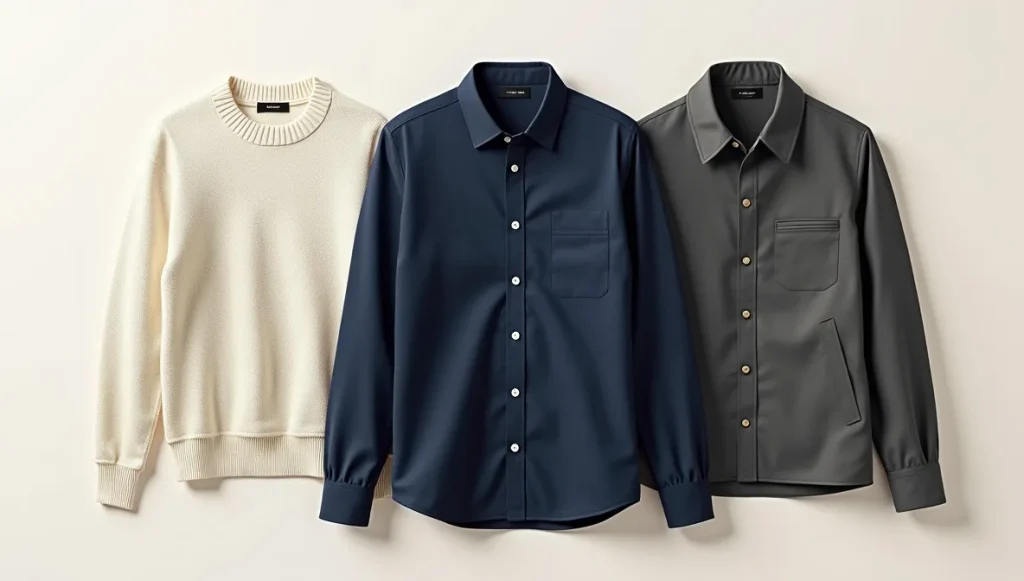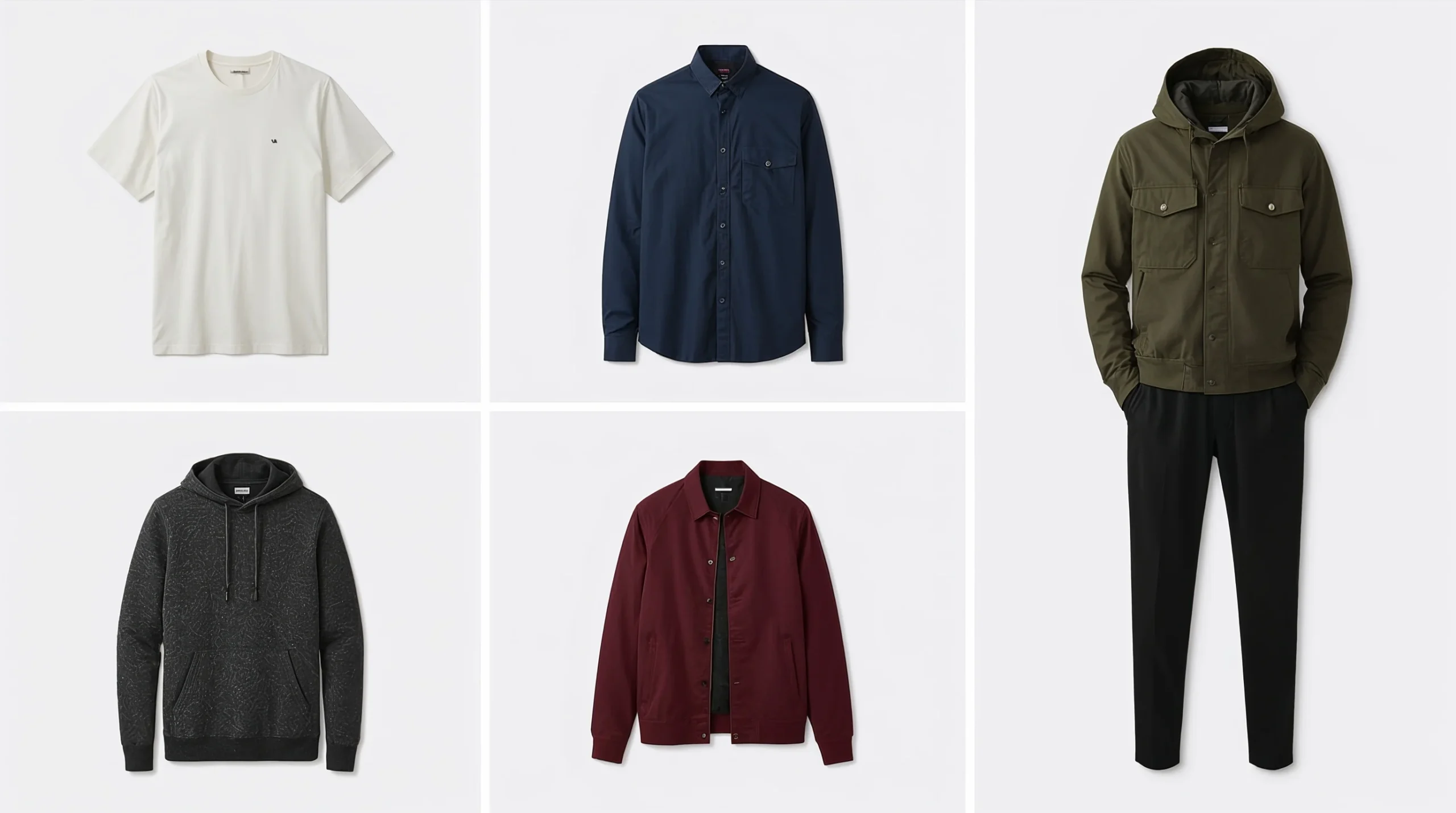
Your jacket has a sharp collar, beautiful stitching, and a shape that stops scrolling.
The mannequin wearing it belongs in a department store clearance aisle.
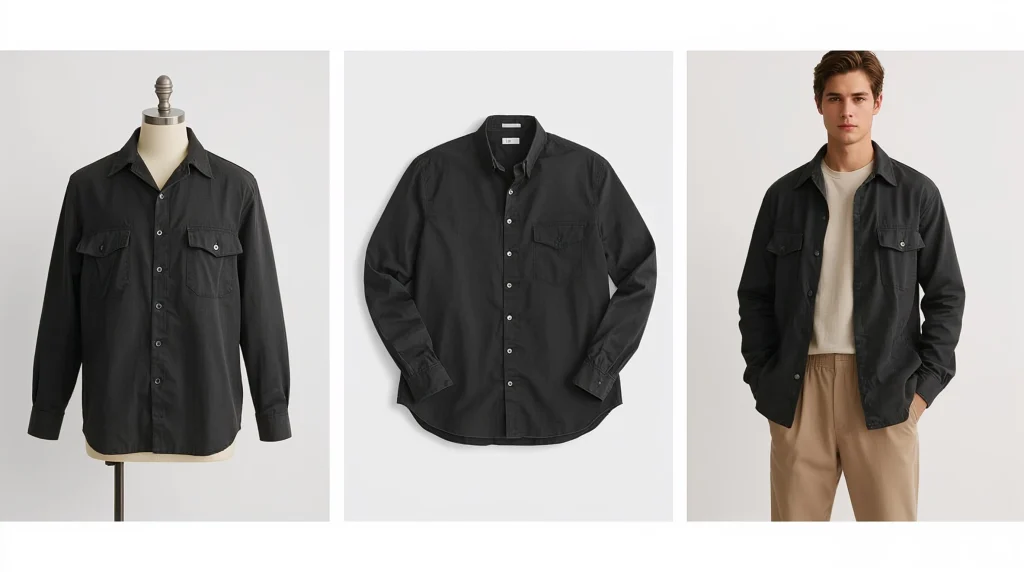
Ghost mannequin photo editing services remove the visible mannequin, combine supporting photographs, and give your clothing a natural, hollow-body appearance. The garment keeps its shape. The plastic torso exits quietly.
For US fashion brands, the key question is not simply which company offers this service. Ask which production setup you need: editing for photographs you already have, or a studio that prepares, photographs, and edits your garments. Then compare the two options below.
This guide covers ten relevant providers, pricing factors, which photographs to prepare, and how to judge results without getting distracted by a very attractive starting rate.
Comparison note: This is a service-fit shortlist based on providers’ published offerings, not a hands-on quality ranking. Remote providers serving US customers are not automatically US-based businesses. Keep that in mind as you move into the service options below.
Table of Contents
What are ghost mannequin photo editing services?
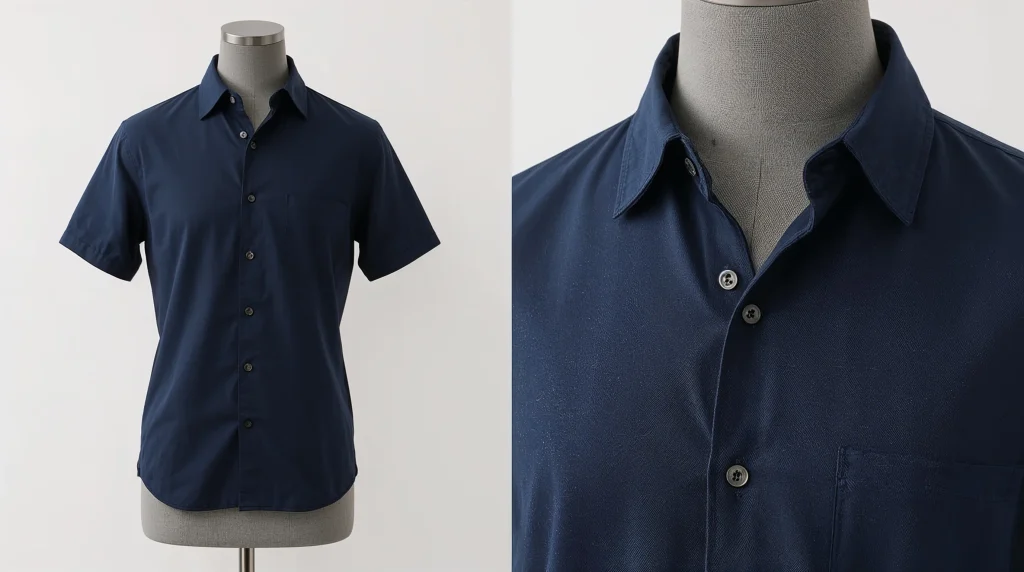
Ghost mannequin editing makes it look like an invisible form is wearing the clothing. An editor removes the mannequin and combines photos to show interior areas hidden during the main shoot, such as the back of a collar.
You may also see the service called invisible mannequin editing or hollow-body editing. Neck-joint editing describes one part of that work: joining the visible garment with a photograph of its inner neckline.
Unlike regular background removal, this is not simply a cutout. The editor must make the reconstructed garment look complete.
Picture a button-down shirt. Removing the mannequin reveals a space where the inner collar should be. A convincing edit fills that space using the actual shirt—not an invented collar that happens to look close enough.
I would judge the final image by one simple rule: correctness before polish.
A shirt should look neatly presented, not redesigned.
Editing-only services vs. full-service photography
Before comparing companies, decide what you are buying. The distinction matters because editing-only services and full studio packages solve different needs.
| Your situation | Service to consider | What to confirm |
| You have suitable garment and interior photographs | Remote ghost mannequin editing | Required source images, joint edits, export specifications |
| You have garments but no usable photographs | Photography-and-editing studio | Preparation, styling, shooting, retouching, sample handling |
| You publish frequent apparel collections | Repeatable production workflow | Batch consistency, naming rules, revisions, delivery schedule |
| You need a few test images | Small editing project | Sample quality, minimum order, included corrections |
Pixelz and Path describe workflows for uploading existing photographs. Hyperblack and Tals Studio publish packages that include photography and retouching.
That distinction matters. Comparing an editing-only price with a full studio package is like comparing tailoring with buying the suit.
If you need help taking the right photographs, start with our apparel product photography checklist.
8 best ghost mannequin services to consider for US fashion brands
1. Pixelz: an option for high-volume studio workflows
Pixelz offers invisible mannequin editing for ecommerce studios, with manual uploads, FTP uploads, and API integration. Its published workflow combines AI technologies, human editors, and quality assurance.
Consider that organizing large image batches matters as much as the individual edit.
Before ordering, ask how source-image pairing, brand-specific instructions, and delivery deadlines will work for your account. Pixelz also describes an in-platform correction process for images that do not meet your standards.
Explore Pixelz’s invisible mannequin workflow.
2. Path: an option with published editing prices
Path lists simple ghost mannequin editing at $0.89 per image and complex editing at $1.79 per image. Its distinction centers on whether an image requires one joining section or multiple joins.
That makes its pricing page useful to understand how reconstruction affects cost.
Path advertises delivery in as little as six hours, but treat that as an available service claim—not a promise that every order will arrive within six hours
Review Path’s ghost mannequin pricing and examples.
3. Global Photo Edit: an option for combined apparel finishing
Global Photo Edit describes mannequin removal, neck- and sleeve-joint editing, wrinkle cleanup, background replacement, and color correction.
It may suit brands looking to discuss several finishing tasks with one provider. Confirm which tasks are included in your quote rather than assuming the entire service menu is bundled.
Its page targets US customers, but its published contact address is in Noida, India. That makes it a remote US-market option, not a verified US editing studio.
See Global Photo Edit’s apparel editing scope.
4. Space & Light Digital: a Los Angeles studio accepting deliveries
Space & Light Digital advertises ghost mannequin photography starting at $25 per image and provides instructions for delivering garments to its Los Angeles studio.
It may be relevant if you need a physical production location and want to discuss shipping or local handoff.
Before booking, confirm preparation, shot counts, retouching, turnaround, and return-shipping arrangements.
Explore Space & Light Digital’s ghost mannequin studio service.
5. Pixofix: an option to investigate for fashion production at scale
Pixofix markets fashion and product post-production using AI workflows and human retouchers, with an emphasis on high-volume ecommerce production.
Its US-focused page also contains a provider roundup. Because that comparison is published by a company included in the list, use it as information about Pixofix’s own positioning—not independent proof that it is the best provider.
Request samples from your garment category and written production terms before deciding.
Explore Pixofix’s fashion post-production offering.
6. Hyperblack Studios: full-service production in Los Angeles
Hyperblack lists garment steaming and preparation, styling, photography, mannequin setup, retouching, and sample management as part of its ghost mannequin offering.
Consider this when you want one studio to manage the production process rather than coordinate separate photographers and editors.
The studio requests delivery specifications upfront and provides customized quotes based on shoot requirements and volume.
Review Hyperblack’s full-service ghost mannequin photography.
7. Tals Studio: a Manhattan package with defined deliverables
Tals Studio publishes a $799 package covering ten products and twenty final retouched images, including high-res and web-optimized versions.
That is a photography-and-editing package, not a twenty-image editing-only order.
A defined package can help smaller collections plan their budget. Confirm the current price, included views, scheduling, and any additional image charges before booking.
See Tals Studio’s apparel photography package.
8. Precision Studios: Los Angeles photography with published tiers
The Los Angeles Clothing Photographer website lists ghost mannequin photography tiers of $32, $27, and $22 per image for increasing item quantities. The published packages include preparation and retouching revisions.
Consider this option when you want to compare a studio’s visible volume tiers.
Confirm how item count, image count, and additional angles affect the final quote. Those are not interchangeable units.
Review Precision Studios’ ghost mannequin photography pricing.
What affects ghost mannequin editing prices?
Before comparing quotes, note the factors that can change the final cost. The lowest headline rate isn’t necessarily the cheapest finished project.
Path’s published pricing illustrates the difference: a single joining section falls into its simple category, while multiple reconstructed areas fall within its complex category.
Use these questions when requesting a quote:
| Cost factor | Question to ask |
| Joint reconstruction | Does the price cover the neck only, or sleeves and hems too? |
| Retouching | Are wrinkles, dust, loose threads, and color correction included? |
| Source quality | Will missing interior photographs require a reshoot? |
| Image volume | Does a discount apply to my actual batch size? |
| Delivery | Is expedited work charged separately? |
| File delivery | Are transparent backgrounds or editable files extra? |
| Revisions | Which corrections are included, and for how long? |
My recommendation: compare quotes for the same source files and the same written brief.
For a small trial, you can compare freelance apparel retouchers before committing to ongoing production. Keep the trial representative: include a simple top and one of your trickier garments.
Which photographs should you prepare?
Before you send files, confirm which images the editor needs. A good editor needs visible evidence of the garment.
Path describes combining a main photograph of clothing on a mannequin with a photograph showing the inner area and label. Pixelz likewise explains that the effect comes from combining multiple product images.
Prepare a source set that fits the final views you need:
- Main front photograph.
- Back photograph, if you need a rear product view.
- Interior neckline or collar photograph.
- Additional photographs of concealed sleeve, waistband, or hem areas, as needed.
- Color reference and brand editing instructions.
Ask the provider to approve a sample source set before photographing your whole collection. One quick check is better than discovering a missing collar shot after you’ve packed away 300 shirts.
Use our ghost mannequin photography preparation guide to organize the shoot.
How to choose a provider without guessing
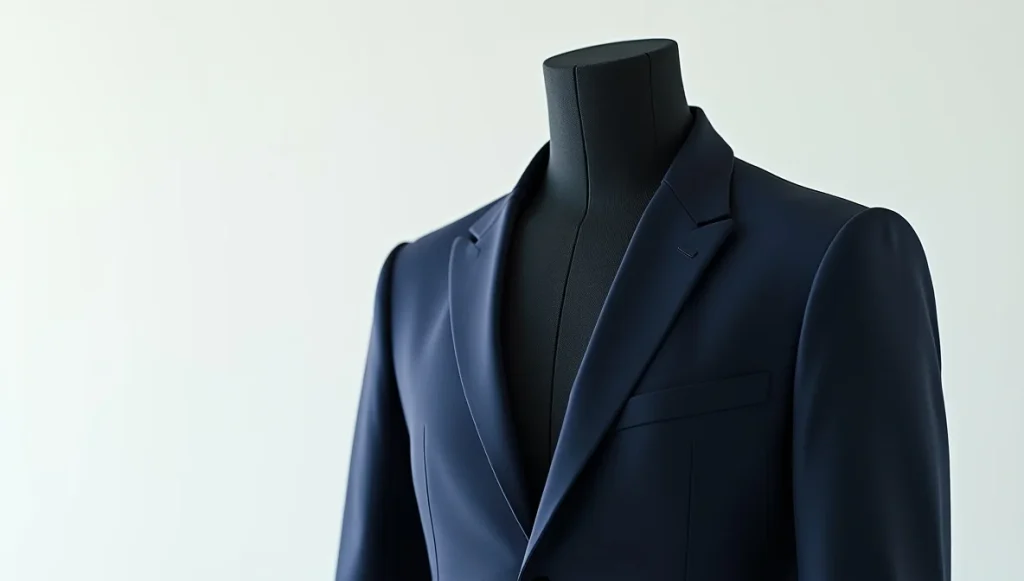
A beautiful portfolio gets a company onto your shortlist. Your own test images should decide whether it stays there.
Check the garment, not just the white background
Inspect the neckline, seams, buttons, sleeve openings, label, and fabric texture. Compare the edit with the original set photographs.
Your acceptance brief should say:
- Preserve the garment’s real proportions.
- Do not invent labels, pockets, or stitching.
- Remove distracting imperfections without flattening fabric texture.
- Match the approved crop, spacing, and background.
- Flag missing source information instead of quietly guessing.
If your shirts need detailed reconstruction, find a retoucher for collar and neck-joint work and request relevant examples.
Test constancy across a batch
One good image is encouraging. A repeatable collection is the actual goal.
Send several representative garments and compare alignment, apparent scale, background, color treatment, and edge quality. Use an approved reference image as part of your product image quality-control checklist.
For a growing collection, discuss a small-batch apparel editing project before outsourcing the full catalog.
Put delivery terms in writing
Agree on when the clock starts, which time zone applies, and how revisions affect the schedule.
Ask about input formats and required outputs too. Global Photo Edit lists formats including JPEG, PNG, TIFF, PSD, and RAW, but you should confirm support with your chosen provider.
Ghost mannequin vs. model photography: use each for its job
Ghost mannequin images keep attention on garment construction. Model photographs add human context. Path recommends combining them rather than treating them as mutually exclusive.
A practical product gallery can include a clean garment view, an on-model photograph, and close-ups of fabric or construction.
The limitation matters: a mannequin-shaped garment doesn’t show exactly how that item will fit every shopper. Keep size information and useful model context alongside the images.
Can you use ghost mannequin images on Amazon and Shopify?
Tell your editor where each image will appear and provide the required delivery specifications.
For Amazon, don’t assume mannequin removal alone makes an adult-apparel main image compliant. Amazon’s current product image guide says adult-size clothing should be shown on a model. It also prohibits visible mannequin parts and requires a pure white main-image background.
Read Amazon’s current product image requirements and check your category-specific guidance before commissioning the shoot.
For your own storefront, define the crop, background, dimensions, and visual treatment you want, then test the delivered images in your actual theme. Hyperblack explicitly requests delivery specifications before producing final assets.
If color consistency is the missing piece, compare product color-correction specialists using the same garment reference.
Frequently Asked Questions
1. Is invisible mannequin editing the same as ghost mannequin editing?
The terms describe the same general effect. Neck-joint editing is a specific reconstruction task within that process, not necessarily the entire service.
2. Can an editor create the effect from one photograph?
Sometimes the visible material is enough for a limited edit. But a photograph cannot document a concealed label or inner collar. For accurate reconstruction, supply supporting photographs of hidden areas.
3. Which clothing items can be edited?
Providers list shirts, jackets, dresses, hoodies, sweaters, jeans, sportswear, and other apparel. The required work depends on construction and the number of hidden areas.
4. Are sleeve-joint and bottom-joint edits available?
Yes, providers such as Outsource2india list both. Confirm that your quote includes these tasks.
5. Do wrinkle removal and color correction come standard?
They may be available, but inclusion depends on the package. Ask for an itemized scope rather than relying on the service name.
6. Can providers handle bulk catalogs?
Pixelz explicitly targets high-volume ecommerce studios and offers batch-upload workflows. Test consistency and agree on production terms before placing a large order.
7. Can I request transparent or editable files?
Specify those deliverables before ordering. Confirm formats, layer requirements, and any additional charges with the provider.
8. Do providers offer samples or revisions?
Policies differ. Global Photo Edit invites free-trial requests, while Pixelz describes corrections through its platform. Check eligibility and limits before relying on either.
9. How long does editing take?
There is no universal deadline. Path advertises delivery in as little as six hours; Global Photo Edit describes most orders as taking 24–48 hours. Confirm timing for your batch and allow for corrections.
Make your next collection easier to launch
Choose the service that fits your starting point.
If you already have suitable photographs, compare editing providers using the same small test batch. If you need the images captured, compare full-service studios and include preparation, shooting, retouching, and shipping in the budget.
Then look closely. The collar should make sense. The seams should line up. The fabric should still look like fabric.
Start with a few representative garments, approve one reference style, and use it to guide the rest of your collection. The best result is not clothing that looks impossibly perfect. It is clothing your customer can understand.