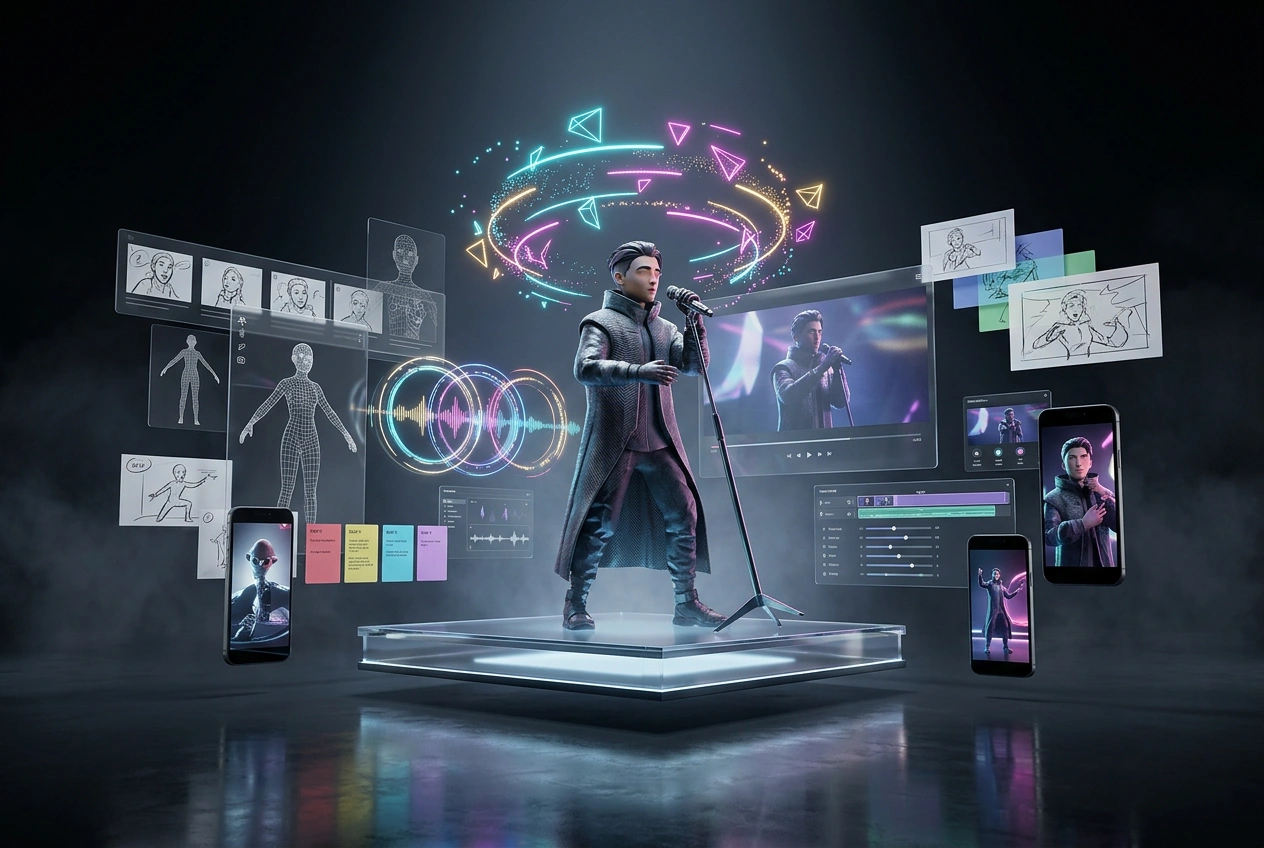
You’ve finished the song. The mix is clean, the artwork is ready, and your release date is on the calendar, staring back like a tiny, judgmental clock.
So the big visual question is simple: what will people see while they hear your music?
At some point in almost every music release, somebody asks the slightly terrifying question: “Okay… what are we doing for the video?”
Twenty years ago, that might have meant renting a warehouse, finding a director, hiring a crew, borrowing a suspiciously expensive smoke machine, and hoping nobody broke a light.
Today, you have another option.
A strong animated music video can turn a track into a world. It can make an independent artist look larger than life, give a virtual band a believable universe, make an EDM drop feel like a neon meteor hitting Earth, or help a children’s song become something families replay until the tablet begs for mercy.
A good animated music video production company can turn your song into an entire visual world without putting you—or anyone else—in front of a camera.
That is where Animated Music Video Production Companies come in.
The tricky part is choosing the right studio.
The right studio does more than move drawings around to the beat. It translates your sound, lyrics, artist identity, audience, release plan, and budget into a visual story people remember. Whether you need a simple animated lyric video, a looped music visualizer, an anime-style narrative, or a full 3D cinematic production, this guide will help you make a smart choice before you send that first deposit.
Animation companies can differ wildly in style, process, budget, and creative approach. Some specialize in polished 3D. Others are brilliant at 2D character work, anime, CGI, visualizers, mixed media, or animation combined with live-action footage.
Rather than throwing random studio names at you, I’ve broken down eight animated music video production companies in the USA worth considering. I’ve also added a practical guide to costs, styles, timelines, rights, revisions, and choosing the right team, so you know what this article covers before you send that first deposit.

Quick reality check: animation is not “cheap live action.” It is its own craft. A good animated music video takes planning, design, timing, revisions, and a team that actually understands music—not just software presets.
Table of Contents
What Does an Animated Music Video Production Company Actually Do?
An animated music video company creates custom visuals for a song, artist, album, or campaign. Depending on the studio and budget, this can include concept development through final delivery files for YouTube, TikTok, Instagram Reels, Spotify Canvas, television, and digital advertising.
Think of the studio as a creative translator. You give them a song full of feeling, rhythm, lyrics, and references. They turn that energy into characters, worlds, movement, typography, color, and scenes that support the song’s impact.
A professional music video animation studio may provide:
- Creative discovery calls and artist-brand research
- Visual concepts, mood boards, and treatments
- Song breakdowns and lyric interpretation
- Scriptwriting or narrative planning
- Storyboards and animatics
- Character design and background art
- 2D animated music video production
- 3D animated music video production
- Anime, cartoon, collage, rotoscope, or mixed-media animation
- Motion graphics, music video design
- Animated lyric video production
- Beat-synced visualizers and looping assets
- Live-action footage combined with animation or VFX
- Editing, compositing, color work, and final exports
- Vertical social edits, teasers, thumbnails, and Spotify Canvas loops
The best studios do not simply ask, “What animation style do you want?” They ask better questions:
- Who is this song for?
- What should the listener feel after 10 seconds?
- Is this a one-off single or the beginning of a recognizable visual era?
- Are you trying to build a fan base, support a release campaign, pitch playlists, entertain livestream viewers, or impress a label?
- What platforms matter most?
That is the difference between a video that looks “nice” and one that truly supports your music career.
Many professional studios can build the concept from your song, lyrics, references, artist identity, and creative brief. Music-animation providers commonly offer storyboarding, character and world design, visualizers, lyric videos, social clips, CGI, and live-action integration to help shape a release and support its goals.
Animated Lyric Video vs. Visualizer vs. Full Animation
Not every track needs a full animated epic with 47 hand-drawn scenes and a cybernetic version of you riding a tiger through Saturn. Still, that would be memorable.
Choose the format based on your goals, timeline, and budget.
| Format | What It Is | Best For | Typical Complexity | Common Deliverables |
| Animated lyric video | Lyrics presented with motion, typography, graphics, and illustrated scenes | Singles, fast releases, audience sing-alongs, YouTube promotion | Low to medium | 16:9 YouTube video, vertical clips, lyric snippets |
| Animated visualizer | Looping or evolving visuals that react to the mood or beat | EDM, lo-fi, electronic releases, playlists, background content | Low to medium | Full video, loop, Spotify Canvas, vertical social edits |
| Full animated music video | A complete visual story, artist universe, or performance concept | Major releases, narrative songs, artist branding, label campaigns | Medium to very high | Master video, teaser, cutdowns, thumbnails, social assets |
| Mixed-media music video | Live action blended with 2D, 3D, collage, rotoscope, or VFX | Hip-hop, pop, alternative, fashion-forward projects | Medium to high | Full master, effects shots, social cuts |
| Character-driven animation | Animated characters act, perform, and move through a designed world | Virtual artists, gaming creators, kids’ music, narrative tracks | High | Main film, character assets, clips, promotional loops |
An animated lyric video production can be a practical entry point for an independent release. It is often faster to make than a fully narrative video, while still giving fans something more interesting than a static cover image.
An animated music visualizer production is especially useful for electronic artists, DJs, gaming streamers, and labels with frequent releases. It can create a recognizable visual system across singles, mixes, and live stream content.
A custom animated music video, however, is where you can build mythology. That matters if you are developing an artist brand, launching a virtual act, releasing a concept EP, or trying to give fans a world they can step into.
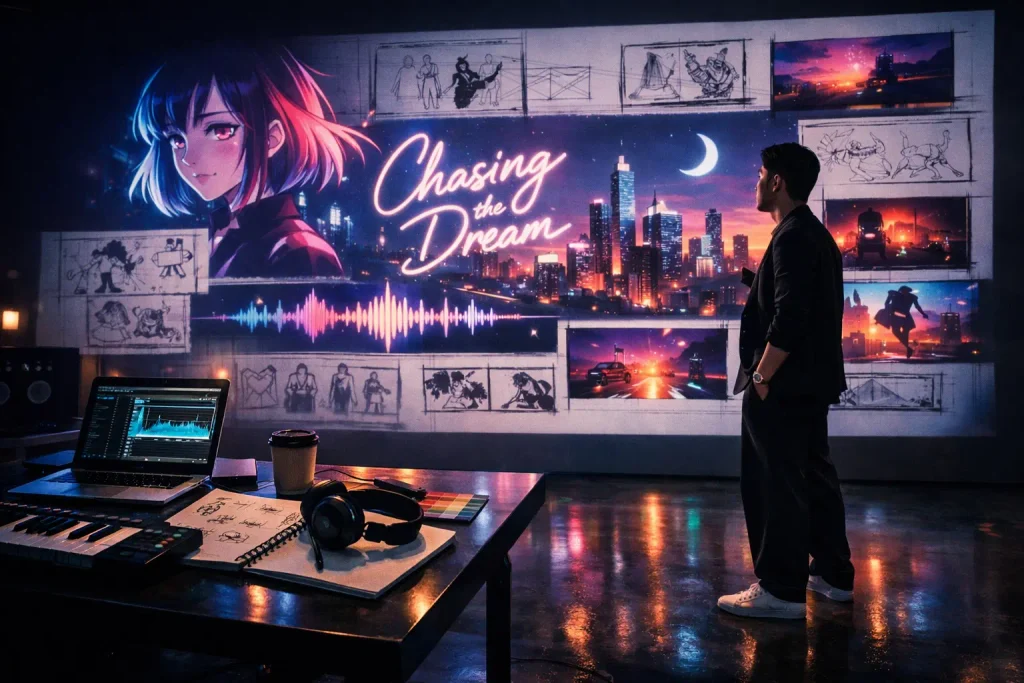
10 Animation Styles That Can Fit Your Sound
Choosing a style is not about selecting the trendiest thing on Pinterest at 1:42 a.m. It is about finding a visual language that makes your music feel like you.
Here are 10 popular options an animated music video production company may offer, depending on your genre, mood, budget, visual goals, and audience.
1. 2D Character Animation
This style gives you a classic illustrated look: hand-drawn characters, stylized movement, emotional scenes, and expressive storytelling with a warm, hand-crafted feel.
It works beautifully for indie, alternative, hip-hop, pop, rock, children’s music, and narrative tracks. A 2D animated music video can feel warm, artistic, weird, nostalgic, or personal.
Best for: emotional songs, storytelling, artist avatars, visual albums, and lyric-driven concepts when you want a warm, artistic, nostalgic, or deeply personal feel.
2. 3D Animation
This style creates cinematic spaces, realistic lighting, virtual performers, surreal objects, game-like environments, and impossible camera moves with a polished, high-end look.
This style is a strong fit for EDM, pop, gaming creators, sci-fi concepts, virtual bands, and artists who want a premium digital-world feel.
Best for: futuristic releases, gaming-adjacent visuals, CGI-heavy concepts, and virtual artists when you want a cinematic, premium digital-world feel.
3. Anime-Style Animation
This style builds dramatic expressions, stylized action, cinematic lighting, fantasy worlds, and fast-paced visual storytelling with a heightened, anime-inspired edge.
Anime-inspired work is popular because it can be both emotional and high-energy. One second, you are staring into a rainy train window. Next, the sky has cracked open, and your protagonist is flying toward a neon moon. Music loves that kind of drama, especially for fans who want cinematic intensity.
Best for: hyperpop, rap, rock, electronic, J-pop-inspired releases, gaming content, and virtual musicians when you want dramatic, high-energy storytelling.
4. Motion Graphics
A motion graphics music video uses shapes, text, graphic elements, transitions, and rhythm-driven design. It can feel clean and modern or loud and kinetic.
Best for: pop, house, tech-house, corporate music campaigns, brand collaborations, and lyric-based promotion when you want a clean, modern look.
5. Cartoon Music Video Production
This style feels playful, exaggerated, colorful, and instantly memorable. It is especially useful when you want a friendly or humorous tone with a distinctly cartoon feel.
Best for: children’s music creators, upbeat pop, comedy tracks, gaming personalities, and family-friendly brands when you want playful, exaggerated visuals.
6. Rotoscope Animation
This style animates over filmed footage. It can make real movement feel dreamy, rough-edged, artistic, or psychedelic with a textured, handmade quality.
Best for: alternative music, indie rock, dance, fashion-led visuals, and artists who want live-performance energy without a standard live-action video, for viewers drawn to an offbeat, artistic feel.
7. Mixed-Media Animation
This style combines different visual materials: photography, collage, 2D drawings, scanned textures, live footage, 3D objects, found footage, and motion design in a layered mix.
Best for: experimental artists, hip-hop campaigns, indie acts, fashion-forward releases, and creators with a strong visual identity when you want layered visuals.
8. Kinetic Typography
Words move, break apart, bounce, stretch, and hit the beat. It can feel minimal, sharp, or expressive in a text-first way.
Best for: lyric videos, rap tracks, spoken-word projects, motivational releases, and social-first campaigns when the words need to carry the energy.
9. Animated Artist Visualizers
This style creates a moving version of the artist, album cover, logo, mascot, or character. It may be subtle, looped, or cinematic.
Best for: Spotify Canvas animations for musicians, release announcements, DJ mixes, merchandise campaigns, and social media teasers.
10. Live Action Plus Animation or VFX
You perform on camera, then animation enters the room. Your microphone sprouts flowers. Your bedroom becomes a fantasy city. Your shadow starts dancing without you, blending real performance with surreal effects.
Best for: artists who want human presence, performance footage, and an imaginative animated layer when live action and animation should work together.
How Much Does an Animated Music Video Cost in the USA?
This is usually the first serious question.
The honest answer: it depends.
The cost of animated music video production depends on the video length, style, artwork, number of characters, scene count, level of detail, revision rounds, turnaround time, rights, and final deliverables.
Published animation pricing guidance shows why estimates vary so widely: simple motion graphics can sit at the lower end, while custom 2D character work, 3D modeling, and broadcast-level rendering can rise sharply. One 2026 industry guide places general animation costs in tiers of roughly $1,000 to $50,000+ per finished minute, depending on technique and quality level.
For music releases, use these ranges as planning benchmarks—not universal quotes.
| Project Type | Practical Budget Range | Typical Timeline | Good Fit |
| Basic lyric video or simple visualizer | $300–$3,000 | 1–3 weeks | Early-stage independent releases and fast campaigns |
| Custom motion graphics lyric video | $2,000–$8,000 | 2–5 weeks | Artists wanting a branded, polished lyric asset |
| Custom 2D animated music video | $5,000–$25,000+ | 4–12 weeks | Narrative releases, character work, distinctive art direction |
| Premium 2D frame-by-frame animation | $25,000–$100,000+ | 2–6 months | Labels, established artists, animation-heavy storytelling |
| 3D animated music video | $10,000–$100,000+ | 6–16+ weeks | CGI worlds, virtual performers, complex camera work |
| Mixed-media or live action plus animation | $8,000–$75,000+ | 4–14 weeks | Artists combining real footage with VFX or illustration |
A very simple 2D project may cost a few hundred dollars per finished minute, while professional custom animation can be priced by artist time, second of animation, or total scope. If a quote seems unusually low for a complex three-minute character animation, check exactly what is included. A “full music video” may turn out to be a single looped scene, a template, or a project with limited commercial use rights.
What Drives the Price Up?
- Frame-by-frame animation rather than limited motion
- Original character design and detailed world-building
- Multiple locations and scene changes
- Realistic 3D models, hair, clothing, or effects
- Lip-sync animation
- Tight release deadlines
- More revision rounds
- 4K delivery and multiple social formats
- Celebrity likenesses or complex animated performances
- Licensed assets, voiceover, sound effects, or stock footage
What Helps Keep Costs Sensible?
- Use one clear visual direction rather than five competing ideas.
- Keep the story focused on a small number of locations.
- Reuse visual assets intelligently.
- Choose a stylized look instead of photorealism.
- Approve storyboard and animatic stages carefully.
- Plan your launch date early.
- Request vertical cutdowns during the initial scope, not one hour before release day.
For artists with limited budgets, marketplaces can also help you find freelancers for lyric videos, animated music visuals, and promotional clips.
Your price will usually depend on:
Duration + animation technique + character count + environment complexity + frame-by-frame work + 3D asset creation + revisions + licensing + delivery requirements.
If your budget is limited, be upfront. A smart studio may suggest a strong visualizer, a limited-animation style, a looping scene, a lyric-led format, or a shorter hero video rather than producing a weak full-scale animation. Fiverr’s music-video category includes animated lyric-video and visualizer services, with offerings ranging from quick-turnaround work to more customized creative projects. Use it as another practical next step when you need one.
How Long Does Animated Music Video Production Take?
A simple answer: start earlier and give yourself more time than you think.
A basic visualizer can sometimes be built in 1 to 3 weeks. A custom animated lyric video may need two to five weeks. A fully illustrated, narrative-driven animated YouTube music video production can take one to three months—or longer for premium 2D or 3D work, where timelines are often extended depending on complexity and production style.
In general, animation timelines range from a few weeks for simple work to several months for more complex projects, with premium 2D or 3D work often taking longer.
Below is a typical workflow and its approximate timing.
- Discovery and creative brief: You share the song, lyrics, references, release date, audience, and budget.
- Concept and treatment: The studio develops the core visual idea and mood.
- Storyboard: Key scenes are mapped shot-by-shot.
- Animatic: A timed rough version helps you check pacing against the song.
- Design: The team creates characters, settings, props, typography, color palettes, and style frames.
- Animation: The visuals begin moving. This is where the magic—and the calendar—really gets serious.
- Compositing and finishing: Effects, final editing, color, titles, and sound-related visual timing are refined.
- Revisions and exports: You review the agreed rounds, approve the master, and receive delivery versions.
A typical production moves through:
Discovery → Concept → Treatment → Storyboard → Animatic → Design → Animation → Compositing → Revisions → Delivery
The animatic stage is your best friend. Catching a storytelling problem here is easy. Catching it after a team has animated 400 frames is how a harmless note becomes a small financial thunderstorm.
Start serious production well before your release date, especially if labels, managers, distributors, or several band members need to approve each stage. Build in extra time so approvals do not slow the schedule. The safest approach is to plan early and leave room for revisions.
Changing the entire concept after animation has started is not like changing a font in Canva. It is a much bigger, more costly change. It can be expensive and slow everything down, so lock the concept early.

How to Choose the Right Animation Studio
Choose by portfolio fit first, process second, and price third.
Before hiring an animated music video production company, review:
- Music-video examples in the style you want
- Character and environmental quality
- Storytelling ability
- Beat and music synchronization
- Production workflow
- Revision policy
- Delivery schedule
- Commercial rights
- Source-file terms
- Social and vertical deliverables, etc
Above all, review these five essential points before hiring.
1. Portfolio Fit
Look for proof that the studio can deliver the style you want. Do not hire a polished corporate motion-graphics team to make an emotional anime narrative unless their work clearly proves they can handle that world.
Ask yourself:
- Does their work feel close to my song’s mood?
- Do their characters have personality?
- Can they tell a story, not just create pretty motion?
- Does their editing actually follow musical rhythm?
- Is the work original, or does every project look like the same template wearing a new hat?
2. Process Clarity
A good partner explains how the concept, storyboard, animatic, animation, revisions, and delivery will work together.
If you hear phrases such as “we will make it epic” but receive no milestone plan, no revision terms, and no clear list of deliverables, pause. “Epic” is not a project management system.
3. Rights and Ownership
Always ask who owns:
- The final video
- Commercial usage rights
- Character artwork
- Original project files
- Editable source files
- Fonts, stock assets, textures, and plugins
- Any licensed third-party material
You will often receive broad rights to the finished video but not the original editable source files unless they are specifically included in the agreement. Get it in writing before production begins.
4. Revision Policy
Ask how many rounds are included at each stage. Revisions are usually easiest during:
- Concept approval
- Storyboard approval
- Animatic approval
- Style-frame approval
Do not wait until the final animation to change the whole story. That is like repainting your house after it has already been completed.
5. Platform Deliverables
A YouTube master alone is not always enough. Ask for a release package that includes the agreed deliverables, such as
- 16:9 HD or 4K master video,
- Vertical 9:16 TikTok and Reels edits
- Square 1:1 or 4:5 social clips
- Short teaser trailers
- Looping visualizers
- Spotify Canvas animation
- Thumbnail artwork
- Captions or lyric files, if useful; clean versions, explicit versions, and broadcast-safe edits
- Clean versions, explicit versions, and broadcast-safe edits if needed
For a modern campaign, your music video should not just sit on YouTube like a museum piece. It should work across your whole release ecosystem. The final takeaway is simple: choose the studio whose portfolio fits best, whose process is clear, and whose rights and deliverables support your campaign. That is the studio to hire.
What to Include in Your Production Brief
You do not need to arrive with a perfect script, a giant mood board, or a degree in animation history. A good studio can help with concept development and storyboarding.
The more useful information you provide, the more accurately a team can quote and plan your project.
Include these items in your music video storyboard and animation brief:
- Final mastered song file
- Lyrics, including timestamps for important lines
- Release date and preferred delivery date
- Artist bio and audience profile
- A short explanation of the song’s story or emotion
- References for visual mood, color, editing pace, and animation style
- Existing artwork, logo, album cover, or character references
- Any must-have shots, locations, symbols, or brand elements
- Creative limits: any absolute “please do not do this” notes.
- Platform needs: YouTube, TikTok, Instagram, Spotify Canvas, LED screens, television, or ads
- Required aspect ratios and resolutions
- Your target budget range
- Your requested revision process
- Rights expectations, including whether you need source files
If you want a realistic animated version of yourself, provide clear front, side, and three-quarter reference images. If you want a virtual character instead, provide references for clothing, posture, hair, facial expression, accessories, and personality. “Cool but mysterious” is a vibe, not a production brief; it is only a starting point.
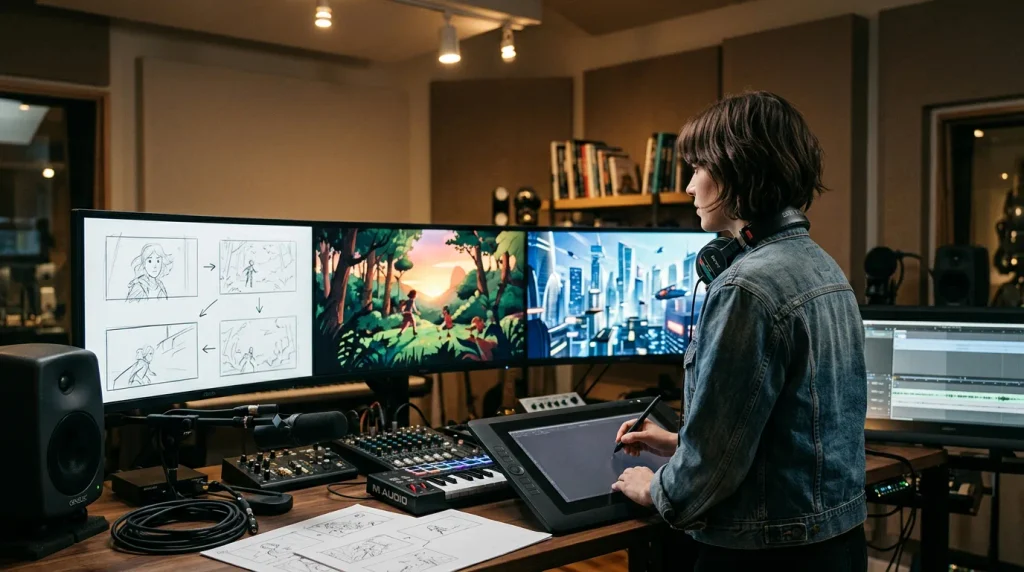
11 Animated Music Video Production Companies to Know
There is no single “best” studio for every artist. The right choice depends on your genre, creative ambition, budget, schedule, and whether you need one hero video or a complete release campaign.
Here are eleven production companies worth reviewing for artists, labels, producers, and creative teams in the U.S. market.
| Studio | Notable Strength | Best Fit |
| PSYOP | Premium animation, design, VFX, 2D/3D execution, entertainment-led work | Labels and artists seeking cinematic, high-concept visuals |
| Golden Wolf | Stylized 2D, 3D, mixed media, entertainment design, anime energy | Artists who want bold, modern, culture-driven animation |
| BUCK | Design-led creative direction, artist-brand worlds, innovative visual systems | Established artists, labels, and large campaigns |
| Giant Ant | Crafted storytelling, illustration, emotional visual direction | Indie, alternative, and narrative-driven projects |
| ToonyVision | 2D/3D, cartoon, CGI, lyric videos, visualizers, Spotify Canvas assets | Independent artists needing multiple release visuals |
| RadioTV | Animation, live action, VFX, character design, storyboards | Projects blending performance footage and animation |
| Broadcast2World | Customized storytelling, animation, motion graphics, and complete visual production. | Independent artists, managers, labels, and music teams that want a professional production workflow with clear stages. |
| Anideos | 2D animation, 3D animation, frame-by-frame work, motion graphics, and editing | Artists who have not yet decided whether their song needs 2D, 3D, or another animation style. |
| Acme Filmworks | Traditional 2D character animation, 3D, mixed media, stop motion, VFX, and live action | Artists who want something distinctive, director-led, unusual, tactile, or difficult to categorize. |
| AD.JUST Production | D animation, 3D animation, stylized animated music videos, storyboarding, editing, live-action production | Animated music video, a live-action shoot, or a combination of both. |
| Vidico | Animation work around 2D/3D explainers, demos, and motion graphics, with pricing beginning around $5,000 per month for ongoing production. | A scalable animated-video partner, particularly relevant to musicians, music-tech brands, labels, and platforms needing visualizers, lyric-led assets, launch content, product storytelling, or repeated social-video output. |
Golden Wolf works across 2D, 3D, mixed media, and emerging technologies, and its music-video work has earned recognition, including award attention for the Adult Swim and DeathbyRomy project “Late Nights.” It is a useful example before getting into what to look for in a studio.
When you review any animated music video studio, do not stop at the homepage reel. Ask to see music-focused case studies. A great beverage commercial does not automatically mean the team understands lyrical pacing, artist identity, fan culture, or a release campaign, so use these checks to move smoothly from first impression to fit.
Animated Music Videos for Every Creator Type
1. Independent Artists and Solo Musicians
You do not need a label-sized budget to create a memorable release visual. Start with an animated lyric video, a visualizer, a short teaser, or a single strong animated scene that can be used as social clips.
The goal is consistency. Build a small, recognizable visual world that reinforces your artist identity, not a random, expensive-looking video that does not.
2. Record Labels and Managers
Labels can use animated music video services to build longer campaigns: official videos, pre-save teasers, character assets, lyric snippets, vertical edits, streaming loops, album motion art, and branded visual systems for multiple singles. Each release then reaches the same audience in more ways.
The biggest advantage is asset efficiency. One well-planned master production can generate weeks of usable campaign content.
3. Electronic and EDM Producers
EDM is built for animated visualizer production. Beat-driven visuals, abstract 3D worlds, looping portals, particle effects, kinetic typography, and reactive design can make a track feel alive without a traditional narrative. The energy helps listeners feel the drop before it arrives.
For DJs and producers, think beyond one video. Build a repeatable visual language that fans recognize in mixes, livestreams, event screens, and social posts.
4. Gaming Streamers and Video Game Developers
Gaming audiences already understand stylized worlds, avatars, lore, and cinematic motion. An animated music video can introduce an original game soundtrack, a creator anthem, an esports campaign, or a virtual performer. This makes the music feel native to the world they follow.
For this audience, consider 3D animation, anime aesthetics, game-engine-inspired shots, or hybrid live-action/CGI production. Each approach can feel familiar while still standing out.
5. Virtual Bands and AI Artists
If your artist exists partly or entirely in a digital world, animation is not an add-on. It is the stage, wardrobe, camera crew, set designer, and public face of the project. That gives fans a complete world from the start.
Create clear character bibles, design rules, and usage rights early. Your visual identity may need to expand into thumbnails, social content, livestreams, merchandise, and future videos. Plan now for consistency later.
6. Children’s Music Creators
For children’s content, prioritize clarity, friendly design, safe storytelling, readable lyrics, and repeat value. Bright visual structure and easy-to-follow characters matter more than making every second look like a blockbuster trailer. That keeps young viewers engaged and helps adults trust the video.
Parents may not say “excellent visual hierarchy,” but they absolutely notice when a video holds attention without turning into visual chaos. Make the experience easier to follow so the payoff lands immediately.
Frequently Asked Questions
1. Can I create an animated music video for an independent music release?
Yes. Independent artists often start with a custom lyric video, an animated visualizer, a social teaser, or a limited-scope 2D concept. A clear brief and realistic budget help you get more value from the project.
2. What animation style is best for hip-hop, pop, rock, EDM, or indie music?
There is no fixed rule, but patterns can help. Hip-hop often works well with illustration, collage, bold character design, and kinetic type. Pop can suit polished 2D or 3D work, as well as colorful motion graphics. Rock often fits rougher 2D, rotoscope, or surreal collage. EDM thrives with beat-synced visualizers, CGI, or abstract 3D. Indie music often benefits from expressive illustration or handmade textures.
3. Do I need to provide character references, artwork, or a creative brief?
You do not need finished art, but you should provide your song, lyrics, artist branding, visual references, release schedule, and goals. If the video includes an animated version of you, send clear photos from multiple angles.
4. Can an animation studio create the concept and storyboard for my song?
Yes. Many studios offer concept development, treatments, visual direction, storyboards, and animatics. Specify which deliverables are included in the proposal rather than assuming every package includes them.
5. Can an animated music video include a realistic version of the artist?
Yes, especially through 3D animation, rotoscoping, stylized 2D illustration, or hybrid VFX. Realism increases the work involved, especially for facial animation, hair, clothing, lip sync, and movement.
6. Does the price include revisions, sound design, editing, and color grading?
It varies. Your quote should clearly list what is included: concept development, storyboard, animation length, revision rounds, editing, compositing, sound effects, and file formats. Never assume.
7. Who owns the final animated music video and source files?
The answer depends on your agreement. You may receive ownership or commercial usage rights to the final rendered video, while the studio may retain rights to editable source files, production methods, reusable assets, or third-party materials. Ask for explicit language on ownership, commercial usage rights, and source file rights in the contract.
8. Can I use the finished video on YouTube, TikTok, Instagram, Spotify, and television?
Usually, yes, if your agreement includes the necessary commercial usage rights. Ask for YouTube masters, vertical 9:16 cuts, square versions, looped Spotify Canvas assets, and, if relevant, broadcast-ready files.
9. Can animation be combined with live-action footage or VFX?
Absolutely. A studio can integrate filmed performance footage with illustrated effects, 3D objects, animated characters, compositing, rotoscoping, and VFX. This is a good choice if you want your real presence in the video while creating a larger-than-life visual world.
10. Can a studio create social media cutdowns from the main music video?
Yes, and you should request them before production begins. Planning cutdowns early helps the studio create compositions that work in vertical and square formats, rather than cropping the original YouTube video later.
11. What is the difference between a lyric video, a visualizer, and a full animated music video?
A lyric video focuses heavily on displayed lyrics. A visualizer often uses looping or beat-reactive imagery. A full animated music video generally involves more complex scenes, characters, or custom animation.
12. Can independent artists afford custom animation?
Yes, but format matters. If a full frame-by-frame production exceeds your budget, consider a visualizer, lyric animation, limited animation, a shorter narrative section, or a loop-based concept.
Final Thoughts
The best animated music video production company is not necessarily the biggest name, the lowest quote, or the studio with the loudest showreel. Instead, it is the one that understands your song, respects your budget, communicates clearly, and can build a visual world that feels inseparable from your music.
Start with your release goal, then choose the format, style, and production partner that fit it.
If you are launching a first single, an animated lyric video or music visualizer may give you a polished, practical starting point. If you are building a full artist universe, releasing a concept project, representing a label roster, or developing a virtual band, then invest in a studio that can think beyond one video and create a visual system you can grow.
Your song already has a heartbeat. The right animation team gives it a face, a place to live, and a reason for people to press replay.
Ready to bring your next release to life? Build a short creative brief, collect three visual references, set your target release date, and start comparing animation studios by style fit, process, rights, and deliverables—not just price.
Listen to your track again with your eyes closed. What do you see?
That answer is probably where your animated music video should begin.
Affiliate & AI Content Disclosure:
Some links on this website may be affiliate links. If you click one and make a purchase, we may earn a commission at no additional cost to you. We only recommend products or services we believe may be useful to our audience.
Some content on this website may be created, assisted, edited, or enhanced using artificial intelligence (AI). AI-generated or AI-assisted content is reviewed where appropriate, but it may contain errors, omissions, or outdated information. To help you use it carefully, please verify important information independently before making decisions.